
Community doesn’t just happen. It requires effort, humility and regular support for one another, publicly and privately.
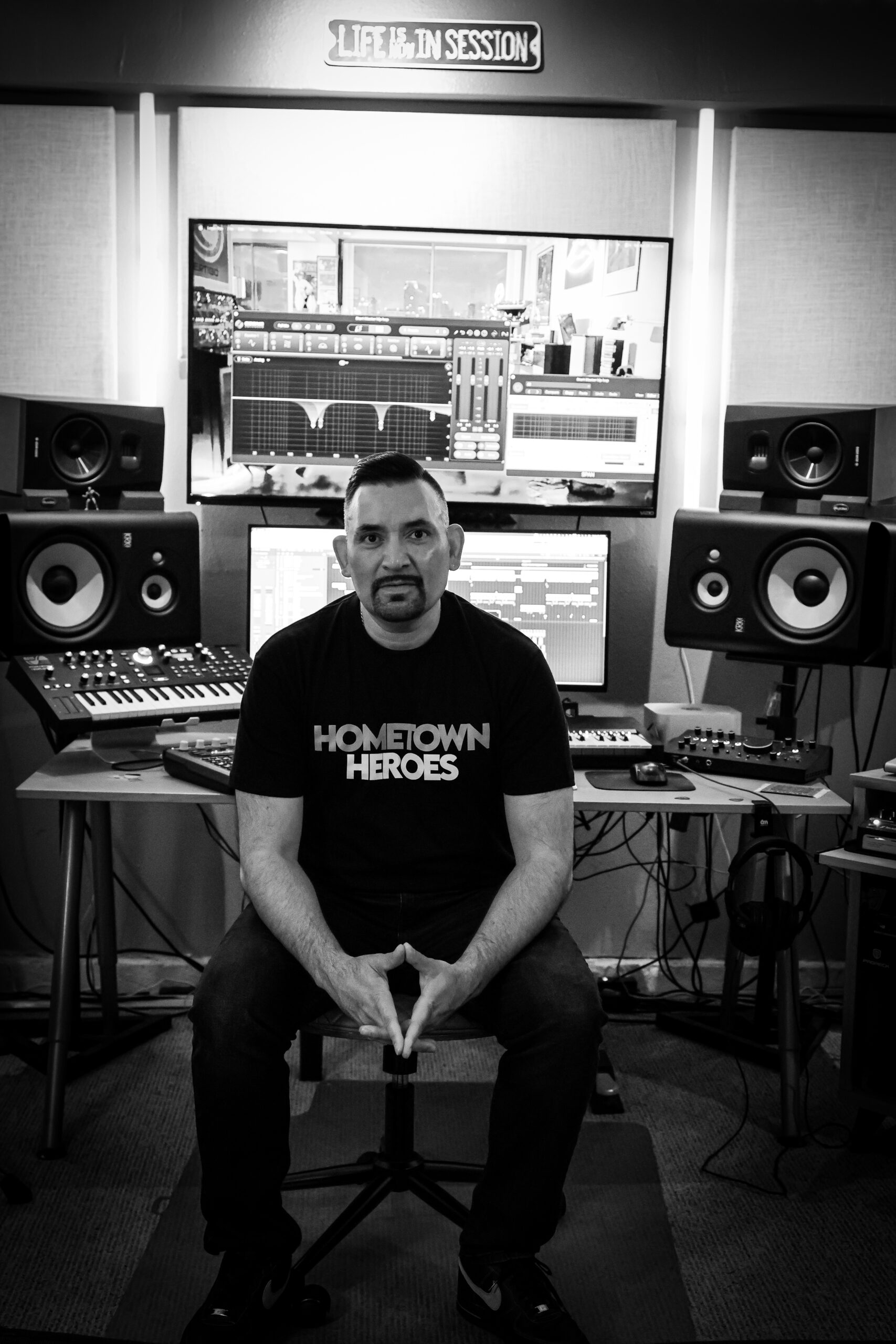
“Community ain’t just a bunch of people in the same room — it’s a network that actually moves together,” said Andrew Lozano, a beat-maker, producer and musician who came up in the Bay Area house music scene prior to relocating to Sacramento more than 20 years ago.
“It’s artists showing up for each other when there’s nothing to gain, sharing opportunities instead of holding onto them, and building something bigger than one person’s run. It’s collaboration over competition, loyalty over clout, and consistency over hype. Real community means you feel the support, not just see it online,” said Lozano, who regularly works with local emcees in addition to releasing ethereal, lo-fi music under his own name. “I think Sacramento has the foundation, for sure. There’s talent, there’s hunger, and there’s people really putting in work. You see artists collaborating, pulling up to shows, trying to build something — that’s real. But at the same time, it’s not fully unified yet.”
Sometimes the love can feel conditional, he explained, but more often scenes are simply fragmented.

It’s not malicious, Lozano said. Rather, “you’ve got a lot of people moving in their own lanes — all the pieces are there, they’re just not fully connected yet. It feels more like a scene trying to become a community, instead of one that’s already locked in.”
Take the group Like Manikins, he continued. The four emcees and deejay that comprise the group are disciplined; and as Lozano saw firsthand while mixing and mastering projects of theirs, everything they do is intentional. They’ve worked with other artists over the last 20 years but for the most part the identity they’ve created for themselves is fully baked, and that can make things feel a bit siloed.
This is common in the local hip-hop scene, he explained. Breaking down those silos was one of the motivations behind the 2025 compilation, “Hometown Heroes,” produced by Lozano as a way of showing love to the hip-hop scene that embraced him when he first arrived to Sacramento.
He started reaching out to early-2000’s emcees but some were skeptical. “At first there was hesitation, but once they hit the studio, it clicked,” Lozano said. “This was never about me. It was about them — putting Sacramento emcees in the spotlight and letting them speak their truth through raw bars and real-life perspective. The grind, the wins, the struggle, it’s all in there. A straight-up tribute to the culture, the hustle and the heart of the scene.”
With “Hometown Heroes volume 2” already underway, Lozano noted something that he hopes one day others will take up the torch when it comes to future volumes. Developing that level of community — that level of drive — for one another is essential to the health and identity of the Sacramento music space.
“Community is the backbone of any local music scene. Without it, you just got talented cats moving in separate lanes, doing their own thing. But when the community is solid, everything locks in — collabs go up, shows feel alive, and the culture actually moves forward instead of just sitting still,” he said. “In a city like Sacramento, where there’s a lot of talent but not always a major machine pushing it, community is everything. It fills the gaps — creates shows, shares resources, opens studio doors and people actually show up for each other.
“It also builds identity. When artists move together, you start to hear it — you recognize a sound, a wave, a frequency that represents the city,” Lozano continued. “And on a real level, community keeps you grounded. It pushes you, checks you, reminds you why you started. In independent music, where it can get real isolating, that support turns the grind from solo struggle into a shared mission.”